
|
This map's not complete. It's just a piece. This page is flagged for further work under the Clan Arcona article improvement drive.
Expected changes include: Full rewrite, general updates
After improvement is complete, please place a note on the article's talk page and remove this message.
|
|
| Selen
|
|
Outer Rim Territories
|
|
Dajorra System
|
|
1: Dajorra
|
|
One (Boral)
|
|
275 million kms (1.8 AU's)
|
|
454 Local Days
|
|
Terrestrial
|
|
13,200 km
|
|
Type I (Breathable)
|
|
Temperate (50¡-75¡ F)
|
|
Standard (1 G)
|
|
87% Water; Remaining land mass centered on numerous islands
|
|
|
|
Selenians
|
|
Humans, assorted others
|
|
55 million (post plague)
|
|
|
|
Varied
|
|
Varied
|
|
Clan Arcona
|
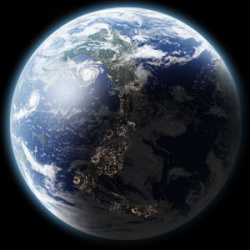
Selen is the home planet of Clan Arcona within the Dajorra System. It currently houses the Arcona Citadel and several Arconan installations. It is the most populated planet in the system with small cities spread across the entirety of the habitable planet. It has one moon, Boral.
History
Selen is a mid-sized planet perfectly suited for most races to inhabit. Most of Selen is covered by ocean, dotted with islands of all sizes. These islands are incredibly fertile, and largely covered in dense forest and grassy plains. Many are uninhabited, and Clan Arcona had its pick when it chose the location for its Citadel.
The Citadel itself is an enormous castle, part ziggurat, part spired towers, terraces and tiers, completely rebuilt and expanded from the pieces that were painstakingly taken from Coronada and its original home. The structure is easily spacious enough to accommodate the entire Clan should the need arise. Resting on the loamy earth of Doto Peak, the highest mountain on the planet and also in the jungle of Estle — hence, Estle City — the Citadel houses the quarters and offices of the Consul and Proconsul through to each Battleteam leader, and functions as a meeting place for all Clan functions. Having built the structure from the pieces of its original home, barracks, training rooms, simulators, and an enormous hangar were also built into the structure. A personal room is available for every member of the Clan, though the halls have never been completely filled; popular folk stories suggest that the Citadel was actually built to house thousands of shadows, and it is them that take up all the "empty" space in the castle.
Below the Citadel is Estle City, Selen's capital. Several other cities are notably populated or serve important roles. Selen has experienced many struggles over the years that devastated Estle City, but has always recovered, as its people follow their creed as builders, and rebuild they always do.
Native Species
Sentients
Selenians are Near-Human humanoids, often tall, most of bright and vibrant eye colors and light of hair in golden shades, distinctive with light striping on their skin in varying degrees. They are a very calm race and slightly distant to the surrounding world, concentrating mainly on the ecology of their planet and the work of their complex hydrodynamics and architecture. The Selenians have five major cities, though Clan Arcona leaders mainly visit their capital of Estle.
Landmarks
Ussun
The largest landmass on Selen, Ussun features mountainous terrain with vast jungles and rainforests in areas of lower elevation. It has the highest population density of all Selen's continents, with native Selenians gathering in large villages and towns that are typically organizaed around a specific industry or function: mining, lumber, fishing, agriculture, some even for spiritual reasons. Selenians living at higher elevation are known for their use of terraced agriculture to take advantage of the landscape in the most holistic way possible.
Estle City (Capital)
- Main article: Estle City
Estle City is the political center of the Dajorra system and its inhabitants. Put simply, whoever controls Estle City controls Dajorra. Presently, Estle serves as the main headquarters for Clan Arcona and as the seat of power for the Consul of the clan.
Originally, Estle City was built onto an island, however during the subsequent alien occupation of the Dajorra system, the island was extensively changed. When Arcona finally reclaimed the system, Estle City and indeed the entire island were dominated by a large mountain intersecting the two. Thus, Estle was rebuilt up the near sheer-cliff face of the mountain, with the Citadel perched atop a plateau at the base of the mountain. As a result, various terraces comprise the city’s innards.
The Citadel
- Main article: Arcona Citadel
The seat of Clan Arcona's power, The Citadel is where the Arconan Summit convenes to discuss plans for the clan and events related to the System's governance. Built out of the rocky peaks overlooking Estle City, the Citadel is a large fortress carved from naturally occurring stone from a nearby quarry. It features a number of amenities created to house and service the Summit Guard, an elite unit of Dajorra Defense Force soldiers, in addition to any Shadesworn housed within its walls. No other location is more important than the Serpentine Throne, the symbol of the Shadow Lord's command.
Giletta Spaceport
- Main article: Giletta Spaceport
The main thoroughfare for starship moving within and without the planet, Giletta Spaceport sees a constant flow of traffic that requires a large, competent staff composed of both organic and droid personnel.
The Lady's Memorial
Korda
- Main article: Korda
Nestled in the Atikan Valley in the southwestern region of Ussun, Korda is Selen's industrial heart. Korda is the second oldest city on Selen, and has cemented its role at the forefront of industrial manufacture. This has come at a cost, however. Endless factories and manufacturing plants spew smog and debris, polluting the air in the valley itself, and marring the surrounding countryside. Korda is sometimes referred to as a "basin of black" by the locals. Only the richest of Korda's inhabitants - the industrial bourgeoisie - can afford to live above ground, building their homes on the valley's mountainous edge, given the need for expensive air-filtration systems.
In spite of the hardships they endure, the disenfranchised inhabitants of Korda's subterranean district have come together to foster.a culture of resilience and cooperation; many people display uncanny resourcefulness and a charming wit born from the demands of surviving a disenfranchised existence. Literature and cinema performances often have an air of cynicism and bleakness about them, though if one looks hard enough, they can find a thread of cautious hopefulness that weaves through every aspect of Lower Kordan life.
Korda is the manufacturing home of the Zratis Arms Corporation.
Aquilla Reef
Sinchi Mountains
Arconan Military Parade Grounds
AEF Logistics Command Center (AKA: The Hive)
Torbai Garrison
Ember Hill
Oacanogoc
Large island located off of Ussun's northeastern coast. The most heavily impacted (both in environmental impact and casualties) area during the Battle of Brimstone. It is home to a sacred site and memorial called The Adansede.
Isamban Island
Fort Blindshot
- Main article: Fort Blindshot
Fort Blindshot is a multipurpose post dedicated to the planetary defense of Selen and the maintenance of the planetary garrison. Situated on an exctinct volcanic island in the north Ninasisa Ocean, the remote location is largely separated from any sort of large civilian population and offers easy defense from external forces through the use of turbolaser turrets and interconnected trench and bunker system built across the island. While the island’s population is purely imported (no native villages extant), it currently plays home to the headquarters of House Galeres.
Apaec
Apaec is the continent located to the west of Ussun.
Naruba City
Established by Eli Naruba of Naruba Investments, Naruba City is the home of all banking activity on Selen. This financial hub was founded in 22 ABY and, within five years, this small settlement, originally intended as an outpost of the InterGalactic Banking Clan (IGBC), became a hive of activity. A migrant population of professionals from all over the Galaxy settled in Naruba City to capitalize on the increasing demand of professionals in and around the Dajorra system. There is little outside of the working focus here, which is only reified by the near indistinguishable high-rise apartment complexes that congregate around the main IGBC headquarters in the city's central plaza.
Many of the most intelligent make their money here before moving to the city of Celeste to retire and enjoy life. As opposed to Estle's trade of goods and culture, Naruba is the main city for interplanetary economic or information trading and houses Selen's planetary stock market. Naruba City is often considered to be the monetary capital of Selen, and is much hated by the more traditional nativists of the planet.
Both Naruba Investments and the Zratis Arms Corporation have their Selenian Offices and Corporate Headquarters in Naruba City.
A top secret military installation hidden on the highest floors of one of Naruba City's numerous highrise buildings, Camp 88 functions as the command center for the Arconan Armed Forces' Holosecurity and Logistics division, where the military's brightest minds skilled in detecting and countering holonet attacks, electronic tampering, and several other crimes work to keep the system. Among their myriad duties, personnel working in Camp 88 are tasked with monitoring the holonet for cases of fraud and tampering with the financial holdings of the IGBC, Clan Arcona, and other institutions that comprise the Dajorran Confederacy.
Erinos Compound
Nestled in the sun-baked highlands of Apaec, surrounded by dense jungle and the jagged ridges of the continent’s mountainous interior, the Erinos Compound is equal parts bastion and refuge for everyone living inside its borders. The Erinos value privacy and strength in equal measure, and doubly so in light of the decimation of its ranks in recent years. The compound reflects this attitude and duality in both its design structure and expansive subterranean complexes. Both a blend of modern and historical Mandalorian architecture, the buildings tend to be camouflaged in earthen colors that mimic the Selenian landscape, such as patches of green on rooftops due to the fostering of moss growth. Although the buildings are decidedly Mandalorian in design with homes that have angular foundations and rounded domes as roofs, the induction of a handful of native Selenians as Foundlings has led to subtle changes in the Clan’s material culture as it has become more inclusive of the cultures of its newer members. Additions more common to Selenian architecture and design have been added.
Unfortunately, though, due to the loss of members during Teroch’s massacre and the fact that not all who carry the Erinos name currently live on the compound, many of these buildings remain uninhabited, built upon the dream of filling them with new faces instead of old ghosts.
Khuno Mountains
Vespierian Isles
Vesperia
Celias
Myanar
Selen Institute for Scientific Studies and Medical Advancement (SISSMA)
Vespia Sea
Celeste
Celeste is an underwater city encased in one large hydrostatic bubble in the northern hemisphere, not far from the equator. This city is home to Dajorra's high society. A wealth of theaters, opera houses, cinemas, galleries, museums, vast libraries, and impressive religious buildings flaunt the city's cultural focus. Large parks and gardens are a common sight in the center of Celeste. Grand mansions and luxurious apartments circle the entertainment district, while smaller homes sit close to the edges of the hydrostatic bubble to accommodate the city's large workforce who maintain its impeccable design. Whilst considered the 'deprived area', this suburb's standard of living is considerably higher than any other in the Dajorra system.
Celeste is only 250 kilometers from Naruba City and can thus maintain solid transport routes to the economic capital. This serves Celeste's populous well, given that most of the city's inhabitants made their wealth and fortune from business ventures within Naruba.
Celeste is considered by many - particularly Celestians - to be Selen's 'cultural capital, a sentiment that tends to ignore the less fanciful of their brethren.'
Tunca
The Northernmost mass of land on Selen, completely covered in ice and snow. Because of its freezing cold temperatures only the hardiest of life can sustain itself. It has been a ritual for some Selenian tribes that still live there that when members come of age, they go to survive alone in the elements for one full lunar cycle as a test of strength, maturity, and virility. Those who passed this test would be considered the prime members of their tribes.
Zainab
Zainab is a city specifically constructed on Selen's northern polar cap in order to help alleviate the huge energy consumption of Selen's numerous settlements through renewable energy sources. This city was commissioned by Zainab Mining Enterprise in 22 ABY - hence the settlement's name - and partially funded by Naruba Investments. Whilst the settlement itself is relatively small, the city of Zainab also includes 100 square kilometers of wind farms, 150 square kilometers of solar energy farms, and a significant number of geothermal heat transformers dotted across the tundra plains, thus making it the 'largest' of Selen's cities.
It has a minimal population of scientists and engineers who keep the farms and generators running efficiently. Inhabitants are required to work in six-month 'tours' and are often accompanied by their families. Houses are built in a cluster to keep their effect on the environment minimal, and are powered entirely by the renewable energy sources they are responsible for maintaining. Residents are heavily reliant on mass imports of food once a month, though there is constant research in an attempt to rely on what foodstuff can be grown in the area. The inhabitants are extremely well-off, given their minimal expenditure and extremely demanding work. Indeed, in recent years, Zainab has also doubled as a research station for many.
On occasion, trade and other intermingling between the Zainab scientists and staff and the local tribes has been known, and the various groups are generally on peaceful terms if not friendly ones. Some hostilities do exist, however, usually over land or law disputes between the two.
Tri'Aigul Islands
A series of islands in the southwest hemisphere of Selen named for each of the gods that live on them, and regarded as holy lands by the natives who guard them jealously from outsiders and offworlders. The Tri'Aigul Islands are some of the oldest settlements still remaining on Selen, far older than any of the modern major cities, and are home to perhaps the most traditional Selenian ways of life from ancient times, preserving the species' past, history, and culture.
Natives tribes of the Tri'Aigul Islands reject almost all modern technology or socioeconomics, preferring tools and medicines of Selen's stone and metal ages. Each island in the chain has drastically different climate, something the peoples attribute to the gods who live there and scientists who study from afar attribute to various oddities of geothermal events and drastic differences in elevation. The tribes live in small villages on each of the three islands, boating or swimming between channels, and are renowned for their unrivaled seafaring abilities.
Tri'Aigulan life and culture centers around worship of the Laqtayto or spirit-gods, an ancient Selenian word taken from the root Laq, or life, their reference to that which binds and exists in all things - which some may equate to the Force. Each of the three isles in the island chain has an associated god from the original animistic Selenian pantheon, with the fourth isle belonging to the "King" of the spirits. Each of the island spirits are shapechangers, and have no specific gender or form, able to take any that they wish and often using various forms to teach various lessons or combat specific threats in oral mythos. Most typically, these gods, despite their catastrophic abilities and associations with primordial elements, are seen as protector spirits.
Borea
Hilanto
The largest of the islands, named after the Selenian spirit of fire. It is said that one day, when fire threatens to engulf the world, Hilanto will return to save the worthy from the ravaging flames.
Hilanto is most commonly depicted as a jungle cat made entirely of flame, spotted by char and streaked with smoke, with burning embers for eyes. Hilanto is associated with compassion, birth and prosperity as well as with destruction, much like fire itself. As such, many other Selenian deities of the hearth, harvest, or health, and those associated with the fire or light elements, such as the Vilcajan Spirit of Healing, Cusi, are considered to be Hilcanto's children.
Huaria
The middle island, named after the Selenian spirit of thunder. It is said that one day, when thunder comes down from the heavens laying waste to all in its path, Huaria will return to cleanse evil and protect the innocent.
Huaria is most commonly depicted as a bird, though the type varies greatly; what is consistent is its wings and tail feathers made of lightning that create thunderclaps when it flys. Brash Huaria is said to bring storms and live in the clouds and is prayed to and feared alike by sailors for good weather, and rare droughts or hurricanes are said to be its anger made manifest. Spirits of change, strong emotion such as vengence, honor, and courage, along with warrior spirits, are associated with Huaria, and all sky spirits are born of its winds.
Hucaro
The smallest island, covered in snow, named after the Selenian spirit of ice. It is said that when an age of ice begins anew, Hucaro will return to freeze the hearts of the reviled, and ensure the safety of the blessed few.
Hucaro is most commonly depicted as a sea snake, sleek and white as wavefoam, as long as the ocean is deep, often shown curling in on itself. Hucaro is the steadiest and wisest of the three, full of knowledge of deep things and dark places below the waves, knowing the slowest turning of the earth, and keeper of its secrets. It is said that the ice caps of Tunca and Pari are frozen over because Hucaro is always touching them with its tail tip and snout, stretched from one end of the world to another. Spirits of patience, knowledge, death, and peace are all associated with and kin to Hucaro.
Aytambawanchac
A barren island to the north of the other three. Named after the King of all Selenian spirits. It is said that when the world threatens to be ended, and all life to be extinguished, he will rise again from the deepest depths of the oceans to promote the rebirth of all Selenian life.
Aytambawanchac is most commonly depicted as a massive, horned sea serpent covered in iridescent, crystalline scales with the hindlegs of a striped jungle cat and the wings of a paradise bird, each of which has one thousand feathers, all a different color. Anthropologists attribute this image, and the images of the other deities, to be reflective of the ancient Selenian tribes and their collective animalistic traits, amalgamated into one creature. Chiefs, spiritual leaders, and ambassadors of various Selenian tribes wear crystals on their foreheads and in their ears or hair as a symbol of their status, said to be the shed scales of Aytambawanchac.
Pari
The southernmost mass of land on Selen, completely covered in ice and snow. The ancient tribes of Selen considered this area to be off limits as it was said to be lifeless, and therefore no life should set foot on its shores or be claimed by the spirit of death.
Minor Landmarks
Totora Island
Tamarra Isle
The Snakepit
Isle of Supay
Misty Oaks
Citayto
Fort Aurora
Vilcuzco
Entar Bastion
Vilcaja
Vilcaja is a relatively isolated, medium-sized island in Selen's Paracia ocean. The closest other island is Vilcuzco, and several leagues northeast of the two are the Vespia Sea and Vespian Isles. Vilcaja is a small island, dominated by jungle and ringed by beaches that meet deep ocean currents well-suited to the populace's fishing practices.
The people of Vilcaja are known to be very isolationist, rather traditional for Selenians and preferring many more of the culture's older practices. They are not tribal, as some Selenian island populations, but are generally more wary of galactic influences from trading and exchange hubs like Estle City. Their population of roughly 800 inhabits the island, mostly in their village of the same name, with 100 some scattered around the jungles and beaches. Buildings are made of wood and stone, but there are metal accents as well that clearly speak of modern technological use alongside the rest of the galaxy. The design of the village, like most Selenian structures, is in tiers, built up over the varying elevation levels of their jungly or grassland islands. The village itself lays on a river that cuts through its upper and lower portions, and outer stone walls ring three sides through the dense trees while the side open to the coast sprawls into the ocean. Various equipment like water towers, comm relays, and so on amidst the traditional stone and thatch homes and shops show modernization, other notable features including a bell tower, a main square with long buildings for large gatherings and an amphitheater, a market district full of stalls and colorful carts, and most importantly, the highest point in the village, the Temple of Cusi, their local goddess and Spirit of Healing.
The leader of Vilcaja is a young Selenian woman named Chupate, looking older than her features suggest. She has very small horns at her temples and hair so blonde it is like sunlight, skin dark orangish tan and eyes sea blue. She comes from a long bloodline of chieftains specifically picked because of their hereditary displays, her family or those like her considered "stronger" or more favored by the old gods.
Oceans
Paracia Ocean
The largest ocean of Selen stretches from the eastern coast of Ussun to its western coast. It is separated from the other oceans by the “Ring of Fire” and the island continent of Apaec.
Ninasisa Ocean
An ocean surrounded by the legendary “Ring of Fire.”
The Shade
Niraya Ocean
An ocean spanning the coastlines of Apaec, Ussun, and the Tri'Aigul Islands, and ending at the “Ring of Fire”.