- " Waiting is painful. Forgetting is painful. But not knowing which to do is the worst kind of suffering."
- ― Paulo Coelho
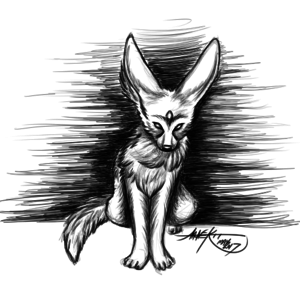 Force-sensitive canid native to Seraph.
Mune Cinteroph's earliest years were spent on Seraph beneath the shadow of his father, Eien Osada. Even before Mune's birth, Eien had taken an invasive interest in what his child might become, altering Mune's developing genetics with material derived from a Force-sensitive species native to the planet. Whether those alterations contributed to Mune's unusually powerful connection to the Force or the deeply instinctual side of their nature would remain impossible to say with certainty. Life under Eien was difficult and often unsafe. Mune learned young to be observant, cautious, and fiercely protective of themself and those they cared about. Their mother, Aimi, remained someone Mune loved deeply, while their brother Seito was another child caught within circumstances neither of them had chosen.
Eventually, Mune escaped and found refuge within a monastery on Seraph. For perhaps the first time in their young life, they were genuinely safe. The change suited them. Naturally inquisitive, Mune delighted in an environment where learning and study were actively encouraged. The monks introduced them to a more spiritual understanding of the Force, particularly the Living Force that surrounded and connected all things. Mune's already remarkable gift for Farsight flourished under their instruction, though the monks discouraged the young Shistavanen from openly discussing the visions they experienced.
The monastery became more than a refuge. It was Mune's first experience with a home where knowledge was encouraged and where they were given the space to discover who they might become. It was during these years that Mune met Asahi. The two were young, but Asahi became someone with whom Mune could be remarkably open. He listened to Mune's thoughts, questions, and, importantly, the visions they had been taught to keep largely to themself. Their friendship deepened into Mune's first experience with love and left an impression that would remain long after their paths separated.
 CSP Emblem
The safety Mune found at the monastery did not last indefinitely. Eien eventually came for them, arriving with a cadre of men intent upon taking Mune back. Faced with the prospect of once again falling under their father's control, Mune defended themself. Eien was killed in the confrontation. Mune would carry complicated feelings about their father's death into adulthood. They eventually made peace with the instinctual part of themself that acted in self-preservation and does not regret refusing to be taken. What remains is regret for what never had the opportunity to happen—that Eien never chose differently, and that circumstances never allowed Mune to discover whether understanding or even forgiveness might someday have been possible.
Mune left the monastery soon afterward.
The monks had given them safety, knowledge, and the foundations of a spiritual relationship with the Living Force that would remain throughout their life. Mune did not leave because they rejected those teachings or the people who had sheltered them. Rather, the time had come to discover what existed beyond the monastery's walls.
That search eventually brought them to the Brotherhood. Mune entered its ranks without ever comfortably fitting the philosophical labels others might have preferred. Their spirituality remained heavily influenced by the Living Force. Still, Mune found little reason to believe that compassion, anger, serenity, fear, love, or aggression could be cleanly divided into opposing halves. They were simply parts of being alive. During these early years, Mune became close with Impetus. The two trained and worked to strengthen themselves alongside one another, developing a friendship built upon mutual trust. Impetus often found in Mune someone willing to listen without judgment, and Mune became one of the people in whom she could confide.
Mune continued to develop their abilities while trying to determine where they belonged in the much larger world they had entered. Farsight remained both their greatest gift and a private burden. The lessons of the monastery remained deeply ingrained, and despite having once shared their visions with Asahi, Mune remained reluctant to place their weight upon others. Before long, their path would lead back to Seraph. And to Asahi.
- " The woods are lovely, dark and deep. But I have promises to keep and miles to go before I sleep. "
- ― Robert Frost
 Cityscape of UCE.
Return to Seraph
Mune's return to Seraph brought them back into contact with their first love, but the reunion would ultimately become one of the most painful experiences of their life. Events surrounding Asahi revealed a threat specifically designed around Mune. A virus had been engineered to target their unusual genetics and was transmitted to Mune through contact with Asahi. Worse still was Asahi's own condition.
There was no saving him. When Asahi asked Mune to end his suffering, Mune ultimately honoured his request. Even years later, Mune considers it the most painful thing they have ever done. The experience profoundly influenced Mune's relationship with lethal force. They do not believe killing is inherently corrupting, nor do they divide such actions neatly between Light and Dark. Instead, Mune carries a much simpler conviction: if another reasonable option exists, take it.
Asahi's collar remained with Mune afterward. What had once represented a promise became something quieter, the memory of someone Mune had loved and would continue to love even as life carried them forward. The virus, however, remained.
Elincia Rei & Caleb Wild'en
- " Love is pure and true; love knows no gender. "
- ― Tori Spelling
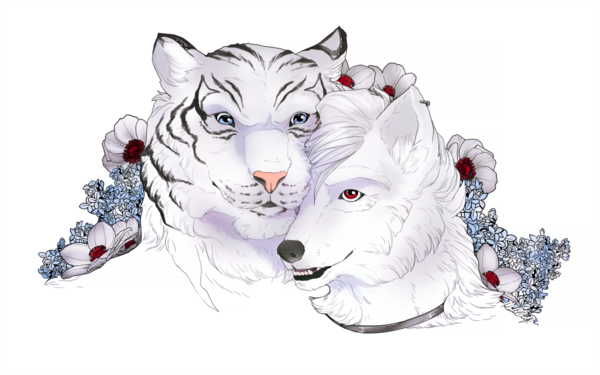 Mune & Caleb
Mune's deteriorating condition eventually brought them to Elincia Rei, a scientist associated with Scholae Palatinae whose expertise offered the possibility of treatment. It was during Mune's treatment and recovery that Caleb Wild'en entered their life. Caleb was assigned to protect Mune and initially approached the responsibility with the detached professionalism expected of a covert operative. The imposing Togorian was disciplined, blunt, reserved, and accustomed to keeping others at a comfortable distance.
Mune did not appear particularly interested in maintaining that distance. Beneath Caleb's intimidating exterior, Mune recognized something familiar: another person who had spent much of their life trying to become what others expected of them. Mune had no interest in Caleb's reputation or the persona surrounding it. They simply wanted to know him. Caleb, in turn, became something Mune had rarely possessed. Stability.
Their relationship gradually moved beyond protector and charge. Trust became friendship, friendship became affection, and affection eventually became love. Where Asahi had once been the person with whom Mune could share the parts of themself others discouraged, Caleb became the person beside whom Mune could simply exist without explanation. Mune would never stop loving Asahi. Caleb never asked them to.
Following the Force
Mune remained within Scholae Palatinae for a time, building a life alongside Caleb while continuing to develop their abilities and understanding of the Force. Eventually, Farsight began pulling Mune elsewhere. There was somewhere they needed to be. Mune could not necessarily explain where that conviction would lead or precisely what waited at the other end. They simply knew that remaining where they were felt wrong.
Caleb trusted them. So when Mune left, Caleb went with them.
For Mune, the decision was not a rejection of everything that had come before. It was simply another step forward, guided by the same Force they had learned to listen to as a child. That path eventually brought them to Clan Arcona.
Family
Arcona gave Mune something they had spent much of their life slowly assembling around themself: family chosen as much as inherited. That family became considerably more complicated when Aimi asked Mune to take responsibility for their much younger brother, Carr. Mune's initial response was somewhere between confusion and annoyance. Carr was brilliant, inquisitive, sarcastic, frequently undisciplined, and possessed an extraordinary ability to involve himself with technology he had probably been specifically instructed to leave alone. Mune nevertheless took the responsibility seriously, and Carr became part of the life Mune and Caleb had built together.
Their relationship changed as Carr grew. Mune initially regarded Carr as someone to protect. Over time, however, Carr demonstrated the same fierce loyalty Mune valued so deeply in others. Beneath their considerable differences—particularly Carr's insistence upon treating the Force as a system that could eventually be explained without resorting to mysticism—the brothers shared a deep concern for the people around them.
Carr would eventually become considerably more than Mune's responsibility. He became someone Mune trusted beside them.
The Voidbreaker II
Within Arcona, Mune found another home aboard the Voidbreaker II. The ship brought together an eclectic collection of people who became friends, confidantes, and eventually another extension of Mune's growing family. Among them was Zig Kaliska, whom Mune came to trust deeply. Her judgment and willingness to challenge those around her made her an invaluable friend and someone whose counsel Mune came to value greatly.
Ro'ki Tel similarly found his way into the extended Cinteroph family through his friendship with Carr. His considerably more easygoing nature—and seemingly inexhaustible supply of terrible jokes—proved particularly effective at amusing Mune. Mune also developed a close friendship with Eleceos, whose own powerful Farsight and empathic abilities gave the pair an unusual understanding of one another.
For someone who had once been encouraged to keep their visions private, the Voidbreaker II gradually became a place where Mune learned to do the opposite. They began speaking openly about what they saw, trusting those around them to help interpret possibilities that Mune had once believed they needed to carry alone. A burden shared, they discovered, was considerably easier to carry. In time, Mune was asked to take command of the Voidbreaker II. They accepted. Mune never regarded command as evidence that their judgment was inherently more valuable than anyone else's. They instead developed a collaborative style of leadership, actively seeking the perspectives of their crew and placing particular trust in Zig, who became their Executive Officer. When challenged, Mune would rather understand why someone disagreed than silence them.
To Mune, authority exists to carry responsibility, not confer superiority. The Captain may ultimately have to make the decision, but that also means accepting responsibility for whatever follows. The Voidbreaker II became more than Mune's command. It became home.
Taken
That home was disrupted when Seito returned to Mune's life. Mune had long regarded their brother with more pity than hatred. Both had suffered beneath Eien, and Mune understood that circumstances had shaped Seito just as surely as they had shaped them. Where Mune had found people and places that allowed them to heal and grow, Seito had followed a very different path. Whatever hope Mune might once have held for their brother did not prevent Seito from becoming a threat. Mune was kidnapped.
During their captivity, Mune lost their memories. Names disappeared. Relationships disappeared. Education, experience, philosophy, and much of the context through which Mune understood the world disappeared with them. What remained was something far more fundamental. Instinct.
The part of Mune they had once regarded as feral came to dominate their behaviour. It was not another personality, nor something inherently malicious. It was the intensely instinctual survivor that had always existed alongside Mune's intellectual nature, now operating without the memories and learned experience that normally tempered and contextualized it. Mune became increasingly dependent upon scent, body language, immediate experience, and the powerful canid senses they had previously relied upon far less consciously. They knew they were in danger. They knew Seito was responsible. They did not know who Seito was.
The Rescue
Carr refused to abandon his brother. With Mune gone, Carr reached out to Arcona and helped gather those willing to bring the Captain home. For Caleb, it was another painful failure to protect the person he loved. For Carr, it became a moment when waiting for someone older or more experienced to solve the problem was no longer an option. They went after Mune. When the rescuers finally reached them, Mune could not remember Carr or Caleb. But memory and recognition proved to be different things. Scent told Mune something their mind could not. Caleb was familiar. Safe. Carr was familiar too. Important.
Mune could not have explained the relationships between them, but the instinctual part of them did not require an explanation. These were people who mattered. People who belonged within the small circle Mune's instincts recognized as their own. Seito threatened them. Mune did not remember that Seito was their brother. They did not remember that he had also been a victim of Eien, nor that the person Mune had once been pitied him and might have sought some means of saving him. The Mune standing there knew only what was immediately apparent. Seito was the threat. Carr and the others were theirs to protect.
The feral Mune acted. Seito was killed during the rescue. Only later would Mune understand what they had done.
Homecoming
Returning to the Voidbreaker II did not immediately restore the person its crew remembered. Mune remained without much of their past, navigating familiar surroundings through sensations and instincts they could not yet explain. Caleb became particularly important during this period. Even without remembering their marriage, Mune instinctively associated the Togorian with safety. The relationship was not effortless. Moments of tension or stress could cause Mune to recoil even from Caleb's touch. At other times, that same touch and familiar scent provided precisely the reassurance they needed.
Carr similarly occupied a place Mune understood before they remembered why. The younger brother Mune had once considered someone to protect had helped bring them home. As their relationship was rebuilt and memories began returning, Mune gradually came to recognize something their instinctual side had already begun to understand. Carr was no longer a child standing behind them. He was capable of standing beside them.
Becoming Whole
Mune's memories returned gradually. Some surfaced unexpectedly, triggered by familiar people, places, scents, sensations, or experiences. Others were drawn out through deliberate work with Eleceos. As one of Mune's close friends, Eleceos combined powerful Farsight with an unusual empathic ability expressed through physical touch, allowing him to help Mune navigate returning memories and the emotions attached to them. The process eventually restored the knowledge of Seito. With it came the realization that Mune had killed their own brother. Mune mourned what had happened and the possibility that had died with him. Seito had been another victim of Eien, and the Mune who remembered him could not help wondering whether there might once have been some way to save him.
Mune also understood something important. The person who killed Seito had not possessed that knowledge. Memoryless Mune had seen someone threatening their life and the lives of people their instincts recognized as important and had acted to protect them. There had been no philosophical judgment, old resentment, or conscious decision to condemn a brother. There had only been instinct. And Mune no longer rejected that instinct as something separate from themself.
As their memories returned, the intellectual Mune returned with them—but the feral Mune did not disappear. Instead, the two increasingly became indistinguishable. Instinct gained context. Intellect learned to trust instinct. The analytical scholar and the territorial predator were not competing identities. They were different expressions of the same person, and the experience of living without their memories had forced Mune to understand a part of themself they had once tried primarily to control. That integration remains visible in ordinary life. Mune unconsciously scents the air, reacts readily to unfamiliar sounds, finds comfort in familiar scents and physical contact, and tends to roam when they need to think. Stress makes those behaviours more pronounced, but they no longer represent a loss of control. Through the Force, Mune has even learned to give that instinctual nature physical expression by transforming into a white-furred Cythraul. The form is not the release of some creature hidden within them, but another shape in which Mune is comfortable being themself.
Captain Once More
Recovery also meant returning to a responsibility Mune had held before Seito took their memories: command of the Voidbreaker II. Mune returned to the Captain's chair changed by the experience, but no less committed to the principles by which they had led before it. If anything, relying so completely upon others during their recovery reinforced their belief that leadership was never supposed to mean standing above those around them. Zig remained a trusted friend and invaluable Executive Officer. Carr was no longer merely a younger brother Mune felt obligated to protect. Caleb remained their rock, but Mune understood more clearly than ever that protection between them flowed in both directions. Eleceos had helped guide Mune through one of the most difficult periods of their life. Mune had needed all of them. There was no shame in that.
Recognition as an Arconae carries similar meaning. Mune values the title because it represents the trust and recognition of their fellow Arconae, but firmly rejects any suggestion that it places them above another member of the Clan. The title of Oracle carries considerably less weight in Mune's mind. Their exceptional Farsight has followed them since childhood; giving it another title changes little. As far as Mune is concerned, they are still simply the Captain of the Voidbreaker II.
Present Day
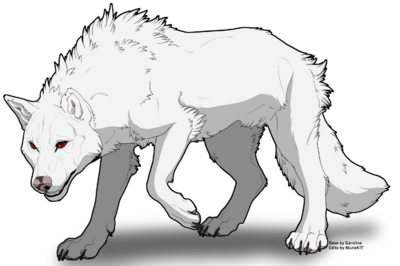 Mune using Transformation to take on the form of a Cythraul.
At twenty-eight, Mune has stopped trying to resolve themself into something simpler.
They remain deeply spiritual without adhering to a conventional division between Light and Dark. They are intellectual and instinctual, compassionate but capable of violence, optimistic enough to believe almost anyone can change, and experienced enough to know that belief will sometimes hurt them. Mune remains prone to withdrawing into endless possibilities when something goes wrong, wondering what they might have done differently. They hyperfixate upon visions and research, keep several projects underway simultaneously, and frequently wander the ship simply because movement helps organize their thoughts.
They are also considerably warmer than their history might suggest. Mune reads voraciously, delights in acquiring knowledge, enjoys terrible jokes and worse puns, and is openly affectionate with those close to them while remaining mindful of their boundaries. Around Caleb, that affection becomes considerably less restrained. Physical closeness remains one of Mune's strongest sources of comfort, and after everything they have experienced, there are few places they feel safer than wrapped in their husband's arms.
Their family has grown around them. Caleb is their rock. Carr is no longer the child Mune must stand in front of, but a brother capable of standing beside them. Zig and Eleceos are trusted friends. Ro'ki and others have become part of an increasingly sprawling extended family. The Voidbreaker II is home.
Mune knows there will be other losses, other dangers, other visions, and other decisions they will wish they could make differently. Farsight has taught them better than most that the future is rarely simple. For once, Mune does not need it to be. Surrounded by people they trust and who trust them in return, they are content to continue forward and discover where the adventure takes them next.
Asked to explain who they are beneath the titles, histories, contradictions, and expectations accumulated throughout their life, Mune's answer is considerably simpler.
"I am me."