Carr was born on Seraph to Aimi Cinteroph and Cormac Silvera, the considerably younger half-brother of Mune Cinteroph. Raised within a wealthy and influential family, Carr wanted for very little materially. At a very young age, he was identified as being exceptionally intelligent. This earned him placement within prestigious private schools where the Silvera name certainly did nothing to hinder his admission. For a time, he fit comfortably into that world but would begin to change when he was seven.
Carr watched a group of wealthier students bully a boy whose academic ability, rather than family money, had earned him a place. Uncomfortable with what he saw but uncertain what to do, Carr walked away. A teacher eventually intervened. The victim was expelled. The bullies were not. Carr never forgot that.
As similar incidents accumulated, the young Shistavanen began forming an increasingly hostile opinion of both his classmates and the adults responsible for them. Students with wealthy or influential families seemed able to escape consequences that others could not. People who claimed to be his friends behaved differently when he was absent or appeared more interested in the Silvera name than Carr himself.
Machines were easier. Computers did not pretend to like him. Mechanical systems did not say one thing and do another. Something either worked or it did not, and when it failed, there was a reason that could be discovered. By eight, Carr spent increasing amounts of his time studying computers, mechanical systems, and whatever technical subjects caught his attention.
He was also starting to fight back.
When Carr encountered another student being bullied, he did what he had failed to do the first time and intervened. His methods were not particularly measured. The resulting altercation earned him the first in a collection of suspensions and expulsions. The pattern continued through several schools. Carr challenged other students when he believed they were abusing someone weaker. He challenged teachers when he believed they were wrong. His increasingly sharp tongue proved nearly as troublesome as his fists, particularly when he discovered information tended to matter considerably less to some authority figures than being publicly contradicted.
His academic performance became equally inconsistent. Carr could absorb advanced technical concepts with remarkable ease while appearing completely uninterested in coursework that failed to engage him. Lessons were frequently interrupted by whatever engineering diagram, computer system, or unrelated theory had captured his attention instead.
Carr did not think of himself as unusually intelligent. He simply struggled to understand why everyone was taking so long.
His family life became complicated as well. Carr met Mune while still young but initially developed little attachment to his considerably older sibling. Cormac's discomfort with Force-users coloured Carr's own perception of both Mune and the strange abilities beginning to manifest within himself. When Aimi and Cormac eventually divorced, Carr's already difficult behaviour deteriorated further. Age and experience would eventually allow Carr to understand his father differently. Cormac had never been cruel ot him, and Carr came ot recognize that much of his father's discomfort had grown from fear rather than hatred. That understanding did not erase their disagreements, but neither did those disagreements erase Carr's love for his father.
By twelve, however, Carr was lonely, angry, repeatedly expelled from school, and increasingly at odds with the world around him. Aimi decided something needed to change, and so Carr was sent across the galaxy to live with Mune aboard the Voidbreaker II.
Carr arrived expecting very little from the arrangement. Instead, Mune and their husband welcomed him aboard. Showed him through the ship. Even gave him quarters of his own. The gesture surprised Carr more than he admitted. After years of adults attempting to manage his behaviour, Mune gave him something he had rarely expected from authority or family. Trust. The crew proved equally unexpected.
 Zig Kaliska
They were strange, diverse, occasionally ridiculous, and, to Carr's considerable confusion, genuinely interested in knowing him rather than his family name. Mune encouraged him to interact with them, but it was their continued attempts to include Carr that slowly convinced him to try. Among them was the ship's captain, {{Zig Kaliska]]. He had every intention of disliking her. She was an authority figure, after all.
Unfortunately for Carr's developing worldview, Zig refused to behave like the authority figures he understood. She treated the people beneath her command fairly and, more importantly, never seemed to believe that holding authority made her inherently better than those around her. Carr was forced to revise his conclusions. Authority itself was not necessarily the problem. What mattered was how someone chose to wield it. Zig became the first authority figure Carr actively sought to learn from, and eventually she became his mentor. Carr eagerly took on tasks around the ship, nominally to stay out of trouble and practically because every assignment gave him another system to study, machine to dismantle, or operation ot understand.
His definition of "staying out of trouble" remained flexible. At one point, accidentally slicing into Zig's personal files, discovering her fanfiction, and leveraging that information for access to the bridge probably did not qualify. Neither did commandeering the ship's laser turrets during an active battle without permission. Carr maintains that he hit the correct targets.
Around the same time, Carr befriended Noga and Leda Tenbriss. Shared interests in comic books provided the initial bridge, though Carr soon found himself making an unusual amount of effort to share his own interests with them as well. Teaching the pair about computers demonstrated a degree of patience few people familiar with his school record might have expected. For perhaps the first time, Carr had genuine friends. That mattered more than he knew how to explain.
The Academy
At thirteen, Carr entered the Estle City Academy on Selene. Recommendations from members of the Voidbreaker II helped open the door, but Carr's entrance scores ensured he had little difficulty proving he belonged there. He entered younger than many of his classmates and immediately demonstrated that intellectual ability had not cured his tendency to challenge instructors when he believed they were wrong. The Academy nevertheless proved different from his earlier schools. Carr was finally surrounded by subjects complicated enough to hold his attention. Engineering, theoretical physics, computer systems, and increasingly advanced technical study gave structure and terminology to concepts he had previously explored independently.
Professors occasionally found Carr maddening. Carr occasionally found professors wrong. Both learned to adapt.
More importantly, Carr was changing socially. The friendships he had developed through the Voidbreaker II had begun dismantling many of the walls he had constructed as a child. He still found people considerably harder to understand than machines, but he was no longer convinced that difficulty made connection impossible. Then, at fourteen, everything changed.
Mune
A journey to Seraph ended disastrously when Mune's older sibling, Seito Osada, attacked their transport. Caleb was seriously wounded, and Mune surrendered themself to protect the others. Carr was left behind.
For most of his life, Carr had been the youngest person in the room. Adults protected him. Mune protected him. When danger became serious, someone bigger, stronger, or more experienced was supposed to handle it. This time, that person was the one who needed help. Carr refused to remain behind. He reached out to Arcona and assembled people capable of doing what he could not do alone. Zig Kaliska, Eleceos Araave, Doon Sulvier, and Kamjin Lap'lamiz joined the operation Carr helped drive forward into the U.C.E. to retrieve his sibling.
They succeeded. Mune came back changed.
The trauma they endured had damaged their memories, leaving Carr initially consumed with the question of what he should have done differently. Eventually, logic prevailed. Blaming himself did not help Mune. Being there did. He would be there while his brother recovered their memories. Carr remained beside them through the process. He listened. He began to understand the bits and pieces of Mune's life. In helping Mune, Carr came to understand the full weight of what his sibling endured long before he had ever entered Carr's life. Their relationship changed as a result. Mune was no longer simply the powerful older sibling expected to protect Carr. Mune could hurt. Mune could need help.
And Carr could provide it.
The brothers gradually learned to protect one another, frequently driving each other mad in the process. Both remained inclined to place themselves between danger and the other, but they also came to recognize that each possessed abilities the other did not. They were stronger together. Carr returned to the Academy with a different understanding of himself. He could not always expect someone else to protect the people he cared about.
Sometimes that responsibility would be his.
Ro'ki Tel
By fifteen, Carr had become a considerably different young Shistavanen from the angry child who first arrived aboard the Voidbreaker II. Still sarcastic. Still troublesome. Still perfectly willing to challenge authority. Just more selective about when.
It was around this time that Cass met Ro'ki Tel after the young Selonian became involved with Arcona. The pair discovered almost immediate common ground through technology, despite approaching it from remarkably different directions. Carr understood systems theoretically. Ro'ki understood them practically.
Carr could disappear into technical explanation so complicated that he frequently failed to notice when everyone else had stopped following. Ro'ki had a talent for dragging those explanations back into the physical world and asking what the machine was actually supposed to do. Somehow, it worked. Their friendship followed them to the Academy on Selene, where the two eventually shared an apartment while attending classes and quarters aboard the Voidbreaker II when they returned to the ship.
Ro'ki also presented Carr with something remarkably comfortable: a friend whose past clearly contained subjects he did not want examined. Carr saw no reason to examine them. Ro'ki would tell him if he wanted Carr to know. Problem solved.
Understanding People
Carr's social life became considerably more complicated in other areas. His friendships with Noga and Leda had long since developed into something Carr could no longer categorize comfortably. He cared deeply about both siblings. Exactly how he cared about either of them proved considerably more difficult to determine.
A first date with Noga clarified almost nothing.
Carr could analyze network architecture, identify faults in complex machinery, and absorb new technical information with remarkable speed. Noga and Leda remained considerably harder. The resulting triangle of affection, uncertainty, and signals Carr may or may not recognize remains an ongoing problem for which he has yet to determine a satisfactory equation.
That does not stop him from trying, though.
People remain difficult for Carr in general. Social expectations frequently feel arbitrary, contradictory, or poorly documented. Carr has become capable of masking many of his difficulties when necessary, carefully managing how he speaks and behaves to navigate situations more successfully. Doing so is exhausting. The effort is nevertheless genuine. Carr wants to understand people. When someone matters to him, he remembers the things that matter to them, even when he does not understand why those things are important. Their importance to someone he loves is usually sufficient. Birthdays remain an unfortunate exception. Carr maintains that they are simply dates.
The Force
Carr's relationship with the Force developed along similarly unconventional lines. He never embraced the identities commonly associated with Force-users and has little interest in defining himself as Jedi, Sith, or anything in between. His current discipline similarly places him outside those traditional ideologies. To Carr, the Force is neither religion nor mysticism. It is a system. An extraordinarily complicated system and one whose variables remain frustratingly under-documented.
He therefore approaches the Force much as he approaches technology: observe behaviour, identify patterns, establish relationships between variables, test assumptions, and revise the model when the results fail to match expectations.
His increasingly sophisticated abilities have consequently developed around perception, prediction, concealment, telekinesis, and interaction with technological systems rather than traditional applications. Calling the Force sacred makes very little sense to him. A hydrospanner is useful too. Nobody builds a religion around that.
Family
Aimi eventually relocated from Seraph to Selene to be closer to both of her sons. Her presence allowed Carr and Mune's relationship to settle more naturally into what it had gradually become. Brothers. Mune was no longer responsible for raising Carr. Carr was no longer the child deposited into Mune's care. They remained fiercely protective of one another but increasingly met as equals, each aware of the other's strengths and vulnerabilities.
Zig, meanwhile, remained something distinct. A mentor.
Carr's respect for her was never simply a product of technical ability or authority. She had demonstrated something to Carr that many adults in his childhood had failed to understand: leadership did not require placing oneself above other people. That lesson stayed with him.
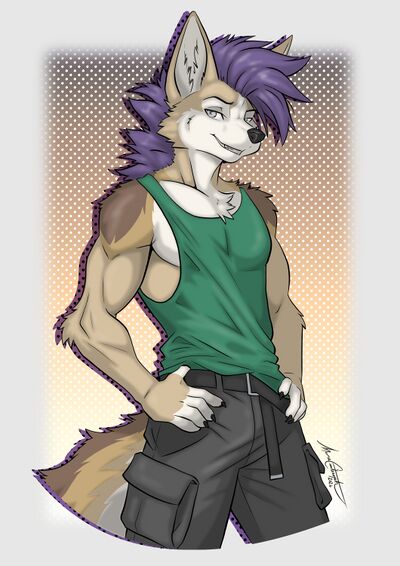 Carr Cinteroph, Shistavanen, Age 17
At seventeen, Carr is an accomplished slicer, engineer, and increasingly unconventional Force-user whose abilities considerably exceed what he usually realizes. His greatest strengths lie in intellect, slicing, mechanics, crafting, and the determination to remain functional when circumstances become difficult. Direct combat, by comparison, remains decidedly secondary. Carr does not consider himself particularly extraordinary. This can be difficult for other people to reconcile with conversations in which he enthusiastically explains theoretical physics, computer architecture, or hyperspace engineering before eventually noticing that nobody has understood the last several minutes.
When corrected, he rarely takes offence. New information simply means the model was incomplete. Carr incorporates the new data and then immediately wants to know where his reasoning failed. This instinct extends well beyond technology. Experience taught him that authority was not inherently abusive; people chose whether to abuse it.
Age taught him that his father's fear of the Force did not mean his father did not love him. Mune taught him that the people who protect him sometimes need protection. His friends taught him that people may be difficult to understand without being impossible to love. Even the Force, however reluctantly, taught him that something need not be fully understood before it can be useful.
The resulting young shistaanen possesses a strong moral conviction despite having very little respect for rules simply because they are rules. Carr has seen too many systems designed to protect those who already possess power while abandoning those who do not. He therefore judges laws much as he judges any other system. By whether they work. Cruelty and abuses of authority draw his anger faster than almost anything else. When someone threatens people unable to defend themselves, Carr's preferred response is rarely direct violence. He would rather dismantle the threat around them: compromise their systems, sabotage their equipment, expose their actions, disable their weapons, trap them behind their own security, or otherwise make continuing considerably more difficult.
Non-lethal solutions are always preferred. Car does not want power over people. He wants the ability to give people who lack power another option. Perhaps that distinction explains what Carr ultimately wants to become. Not more powerful. Capable. Capable enough that when someone needs help, he does not have ot wait for somebody better qualified to arrive. Capable enough to stand beside Mune rather than behind them. Capable enough to protect the strange collection of people who became his family. Car's greatest fear lies buried somewhere inside that ambition.
Machines can be fixed. Systems can be understood. Problems have solutions. Carr desperately wants to believe the same is true of everything else. Somewhere in the back of his mind is the possibility that one day he will encounter something he cannot repair, outthink, sabotage, or solve. For now, Carr deals with that possibility the way he deals with most uncertainty. He learns. He tinkers. He prepares. And when nobody urgently requires saving, he can usually be found with his hands buried in some piece of technology, making unnecessary modifications to his droid, avoiding cleaning his apartment, trading dry remarks with his friends, or slowly teaching himself how to play an electrified dual guitar.
There is always something else to understand.
Carr intends to be ready when understanding it matters.